Providing an opportunity for a broad range of countryside bodies and individuals to discuss policy and constructive initiatives for conservation, country sports and countryside management.
The Game Fair was held at Ragley Hall again on the last weekend in July. The weather was ideal, fine but not too hot. Having taken over an hour to drive the last couple of miles last year, I set out early with a flask of coffee and biscuits for breakfast in the queue. In the event, I arrived at 8 am and was parked five minutes later. Luckily, the GWCT (Game and Wildlife Conservation Trust) had some excellent pastries and coffee as I attended an early press release.
The showground seemed to be better laid out this year with broader avenues and more open space. As a result, some suggested that there were less people there but I think it was just the extra space. Certainly, the organisers claimed a record crowd but the only figure I have seen is 119,378 for 2021. As usual, the event started with a mass firing of black powder in the main ring.
For those who have never been, it is a huge celebration of country sports, from shooting to falconry, fishing to dog competitions, said to be the largest in Europe. There is always a great atmosphere, cheerful and friendly, but last year was exceptional coming after months of lockdown and restrictions. This year, the mood was remarkably upbeat considering the challenges that country sports face, especially lowland shooting.
The recent record temperature and the prospect of a drought being declared set me thinking of the practical implication of climate change for farmers. The first six months of this year have been the driest since 1976 with February the only month when rainfall was above average.
I vividly remember 1976. The previous Michaelmas, I had taken on the tenancy of Cannon Heath Farm, an extra 1,000 acres on the south side of Watership Down. Full of enthusiasm and with a large bank loan, the harvest of 1976 was disappointing, to put it mildly. Harvest was over by the end of July and most crops achieved little more than half the budgeted yield. At least the cost of harvest was low and the drier was redundant! The planned investment into a breeding ewe flock had to be scaled back significantly.
It was not as hot as this year, but the warm sunny days continued for more than two months, unlike this year when, the brief heatwave apart, there have been cooler cloudy days too, just no rain! As I write this, combines are cutting winter wheat and oilseed rape, even winter beans. Reports of winter barley were reasonably good but it is too soon to get much idea of the rest of harvest. Those who have given an indication of winter wheat suggest that it has held up remarkably well with little damage to yield or quality caused by drought. That may be because there was some rain at the end of May, a critical time.
What impact will climate change have on arable crops over the coming years? In theory, a higher level of carbon dioxide in the atmosphere may boost yields but only if there are no other limiting factors. Milder damp winters should extend the growing season, vital if harvest is to come earlier. It may not matter if crops ripen in late June and early July if there was more growth in winter and spring, although day length plays its part too in crop development.
There have been new crops grown over the past fifty years or, at least, a larger area, and this will surely continue, whilst geographic range moves northwards. Oilseed rape was brought in by the Romans, it is thought, and there are certainly records of it being grown in the 14th century. But it was almost unknown on British farms until the mid-1970s when it suddenly became very popular. Very large areas were grown until neonicotinoid insecticides were banned after several years of restrictions, and decimation by flea beetle attack persuaded many farmers to give up growing the crop. The area is increasing again as agronomists learn how to combat flea beetle attack without using insecticides.
Rapeseed is one of the most widely used cooking oils, another being sunflower oil. The area where sunflowers are grown has moved north through France, could we be growing them here? Planted at the end of April, they should be ripe to harvest by the end of September. One report suggested that late frost could take a toll but another said that they are relatively frost tolerant. Certainly, soil temperature needs to be above 6°C when the seed is planted so a cold spring might be a problem. They need relatively little fertiliser but are somewhat susceptible to disease, particularly sclerotina. Yields of 5 tonnes per hectare have been achieved in France and Germany.
Whilst speaking at the AGM of the Berkshire CPRE recently, I was asked why we import soya from Brazil, encouraging farmers to destroy the rain forest. In 2019, some 3.5 million tonnes of soya beans, either whole beans or oil and meal, were imported, 65% from South America. 75% is used in livestock rations but there is also a growing market for human consumption. When soya is crushed, the result is 20% oil and 80% cake or meal which is fed to animals. With its combination of amino acids, it is high quality protein, unmatched by the peas or beans that are currently produced here. So could we grow soya in the UK?
A report published in 2017 claimed that 5,000 ha were grown that year with the prospect of 10,000 ha the following year. So it would appear to be becoming more widespread, although I have not heard of any farmer growing the crop. As a legume, it could be a valuable restorative option, providing high quality oil and protein whilst reducing imports. Like sunflowers, it is sown in late April and harvested in late September or October. As most soya grown in South America is GM, the beans grown here might command a premium.
Maize is another crop that was rarely seen on British farms until the 1970s but is now grown widely, ensiled for animal fodder, as feedstock for anaerobic digestion plants or even a little for grain. Perhaps the biggest success has been vines with a huge increase in the area and range in recent years. Our sparkling wines have even competed successfully with champagne! These trends will surely continue.
The problem for grazing livestock is the lack of grass growth in a summer drought. It is ironic that ruminants may be able to graze through the winter but may need supplementary fodder in mid-summer! Lucerne and sainfoin, both legumes and drought resistant, may be more widely grown.
The combination of climate change and the skill of plant breeders may well result in a broader range of crops grown in the UK, especially when gene editing becomes more widely used to speed up the development of new varieties. One risk is that climate change may also bring new pests and diseases to threaten crop production. But farming is remarkably resilient and there will be opportunities to exploit.
Sir James Dyson is one of the largest landowners in England with some 35,000 acres. Although not from a farming family, he helped out on farms in North Norfolk as a youngster and has a deep love of farming and the countryside. Thus it should be no surprise that, on the back of his success in business, he should invest in farmland.
His first purchase was the Nocton Estate in Lincolnshire in 2012, to which he has added over the years, now owning around 28,000 acres in the county. He bought land in Gloucestershire north of Bath, then the Churn Estate on the Berkshire/Oxfordshire border formerly owned by Reading University. The following year he acquired the adjoining gallops, then the land at Compton which had been occupied by the Institute of Animal Health. That took his land holding in the area to 4,700 acres.
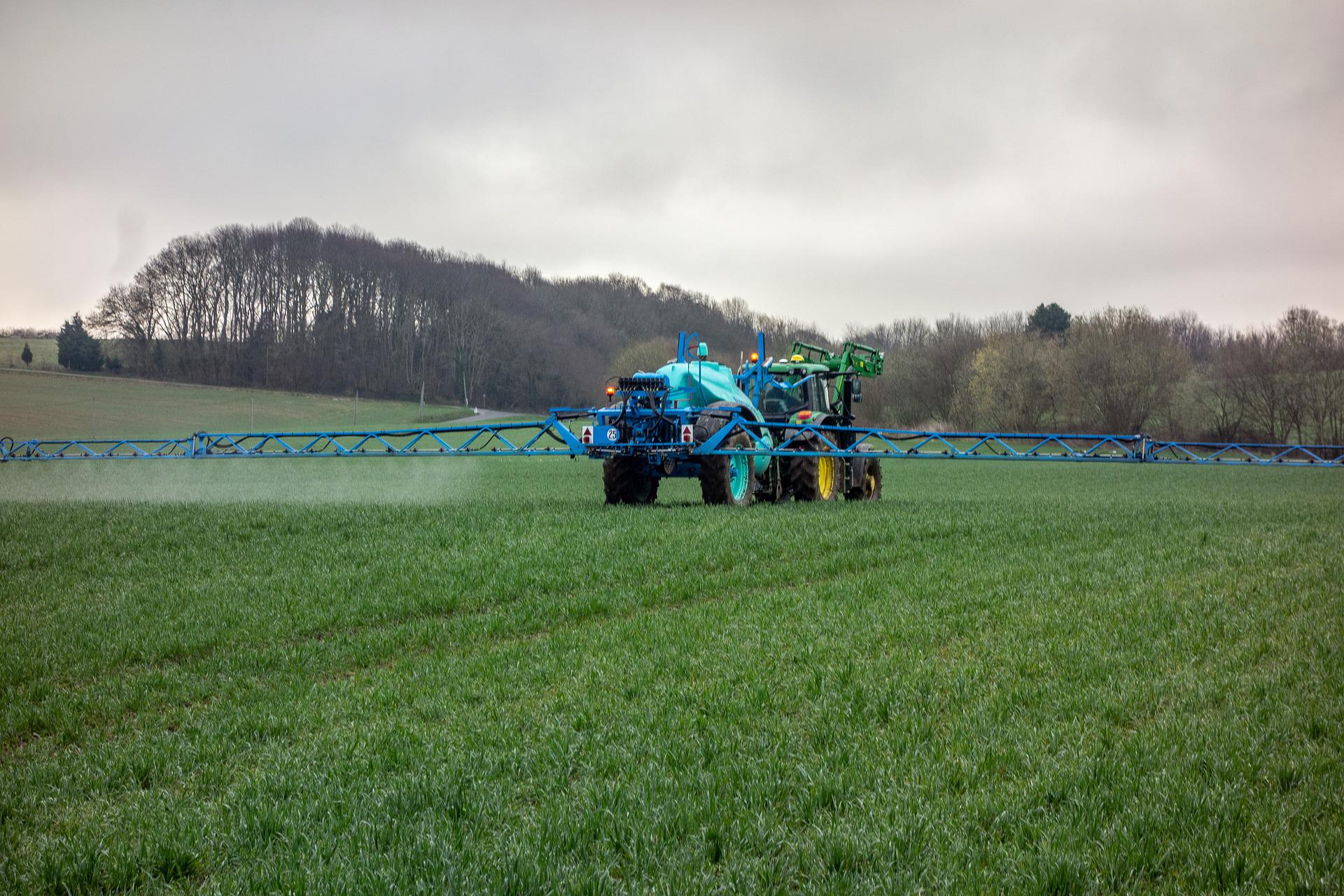
If we are to feed the world’s population, we must produce as much food over the next fifty years as we have done throughout the history of humanity, all without wrecking the planet. With priorities of climate change mitigation and reversing the decline of wildlife as well as providing food, can that be achieved by farming without the use of chemicals, synthetic fertilisers and pesticides? That was the question for debate at the recent meeting of the Countryside Forum.
The answer is no or, at least, not yet. Scientists are making huge strides in research but it may be twenty years before we can produce enough food without extensive use of nitrate fertiliser and pesticides. Global yields would fall by 40% if we were to cut out pesticide use now, 45% from weeds, 30% from insects, 20% from disease and 5% from other causes. But, by exploiting emerging technologies and integrated pest management, we can reduce their use and impact on the environment.
The country of England has long been divided up into smaller areas or regions for several purposes. In the first millennium AD, there were separate kingdoms, Wessex, Mercia, Northumbria and the like, which were unified by King Athelstan in 927. We have had counties for centuries, at one time divided into Hundreds, enough land to sustain approximately one hundred households. In a two tier system, we now have counties and districts with administrative responsibilities and, more recently, unitary authorities.
But these are all administrative areas, the boundaries of which have little relation to geology or landscape. We have fifteen National Parks, ten in England that cover 10% of land area and reflect the environment with some administrative functions, planning for example. The aim is to ‘conserve and enhance the natural beauty, wildlife and cultural heritage and to promote opportunities for the understanding and enjoyment of the special qualities of National Parks by the public’. There are also 46 Areas of Outstanding Natural Beauty, 34 in England, that have the same objective except for the latter public enjoyment part. They cover 18% of the countryside but have little direct administrative function.
The world has changed dramatically over the past few years. Only time will tell how far the tectonic plates have shifted and whether life will ever be the same again. In the UK, the pressure has been felt particularly in the countryside and the food chain.
The first seismic shock came in 2016 when we voted to leave the European Union, although the impact came later on our subsequent secession. That meant that we left the Common Agricultural Policy and had to design a new farming and countryside policy from scratch. This has been a very slow process and we still have few details other than that direct payments are being phased out and, instead, farmers will be paid public money for public goods. This is the most fundamental shift in policy since the Second World War and will inevitably cause difficulties along the way. Brexit brought major disruption to our trade with the EU, by far our largest trading partner. Some of that disruption has been smoothed over but much of it remains. Another impact of secession was the end of the free movement of labour, which caused huge shortages that persist today due to a totally misguided immigration policy.
The shooting season is over for another year. It has been one of recovery after the disruption of the previous one. When the pandemic hit early in 2020, it was not clear what impact it would have. Some shoots closed down, some reduced the number of birds released and others carried on as normal.
Shoots that sell days try to get bookings in February or March so they know how many poults to order from the game farm. More importantly, they can use the deposit to pay for the poults and other costs that occur before the season starts. Cash flow was severely affected by guns unwilling to book days so far in advance during the pandemic bringing a knock-on impact.
There are several reasons for planting trees, some mutually incompatible. In past centuries woods were established primarily for sporting purposes, hunting and shooting, which is why we have so many small farm woodlands. These mixed species woods with glades and rides are also good for wildlife, another reason for planting. Then there are forests established for timber, for furniture, construction, fencing, pallets and fire wood. Here the density needs to be greater to ensure tall straight growth with fewer side branches. Whilst hardwoods are planted, the majority is conifer because it is quicker growing. Much of the expansion of forest established by the Forestry Commission over the past century has been of Sitka spruce, but a dense plantation of conifer for timber production provides very little habitat for wildlife.
The turn of the farming year comes at Michaelmas in late September rather than now. That is the time when harvest yields are reckoned, cropping plans for the coming year implemented. Ewes are flushed to increase ovulation before the tups join them and winter housing is prepared for cattle. And yet it is customary, as Big Ben rings in the new calendar year, to reflect on the twelve months gone and look forward to the seasons to come.
Henry Edmonds has lived at Cholderton all his life and has farmed there since his father died forty five years ago. The estate is 2,500 acres of Grade 3 and 4 land, thin soils over chalk. When he came home from college, thinking he knew a thing or two, Henry planted barley in the confident expectation of achieving two tonnes per acre. He was bitterly disappointed when he managed only twelve cwt and realised that a new approach was needed. He determined to increase the organic matter and fertility of his soils using grazing livestock on long leys and converted to organic status. Now he grows two tonnes of barley per acre without any fertiliser or pesticides.