Category: Uncategorized

The Political Lobby

Lobbying is the attempt to influence the views and actions of others, usually by force of argument but sometimes by more nefarious means.  It is a massive industry worth billions of pounds each year, as illustrated by the sums paid to prominent people who are thought to be persuasive such as former Prime Ministers.  It is considered by many to be an art form, especially if someone’s opinion can be changed without realising that they have been influenced.

            The theme of the last Countryside Forum conference held earlier this year was: ‘is countryside policy increasingly and disproportionately being influenced by single issue pressure groups?’  Many lobby groups have been around for a long time.  The CLA, for example, was founded in 1907 to champion the property rights of rural landowners, the NFU set up in 1908 to promote the interests of farmers and the CPRE in 1926 to campaign for stricter planning laws to protect the countryside.  All might have been considered single issue at the time but, over the years, have found that broadening their remit increases influence with policy makers.  As farmers and landowners have diversified, so both the NFU and CLA have widened their interests to reflect that trend, the latter becoming the Country Land and Business Association, whilst the CPRE has recently added the Countryside Charity as a strapline.

Continue reading “The Political Lobby”

Newbury Show

This is the season for outdoor rural events, agricultural shows, village fetes, Battle Proms, game fairs amongst them.  The Covid-19 pandemic has caused chaos with most cancelled last year, many again this year.  Even before the pandemic struck, some were in financial difficulties and it remains to be seen how many will survive into the future.  Habits and tastes change and agricultural shows no longer attract the gates they once did.

            The most obvious casualty was the Royal Show at Stoneleigh Park, the last held in 2009.  Once arguably the most prestigious agricultural show in the world, it had lost focus and attendance had been falling for years.  The Royal Agricultural Society of England, which ran the show, reverted to its original aim of education and knowledge exchange.  It sold most of its unique collection in 2014 and a 150 lease on the showground, which is now being redeveloped as a centre for science-based rural industries.

            The CLA Game Fair was another to go under, the last held in 2015 at Harewood in Yorkshire.  Despite its huge success, the event had been losing money for some years, most notably in 2007 and 2012, both cancelled due to bad weather and waterlogged ground.  The CLA claimed that cancellation insurance was so expensive that profits could not be made and decided to end its association.  Fortunately it was picked up by another organisation and, after an uncertain start in 2016, has gone from strength to strength since.  This year it will again be held at Ragley Hall in Warwickshire on 23rd to 25th July.

            The appalling summer of 2012 caused many events to be cancelled.  The much loved Alresford Show, a throwback to agricultural shows of old, is held on the first Saturday in September.  That year it was called off on the morning of the show when cars had to be towed into the car parks.  That caused a huge financial deficit from which the society only recovered with help from the Tichborne Estate which hosts the show. 

But survive it did and further events have been held since.  The 2020 show had to be cancelled due to the pandemic and the society has taken the decision not to hold one this year either.  It costs around £220,000 to put on the show and the usual attendance of around 15,000 people is required to cover that figure.  There has to be a risk that some limit on attendance might be imposed due to the pandemic for which insurance is not an option.

However, the South of England Show was held this year from 11th to 13th June on its showground at Ardingly in Sussex.  Of course, it lost money last year without a show or other showground lettings, but reserves are sufficient and the show remains a going concern.  Whilst the show makes a modest profit, it is the letting of the showground for other events, car boot sales, heritage proms, even pop concerts, that is a significant source of income.

So, how financially viable is an agricultural show today?  So many have been lost over the decades, those that have survived and prospered have bucked the trend.  There has been great debate about the future of the Royal County of Berkshire, more commonly known as Newbury Show.  It was not held last year, nor will it be this, and there has to be a doubt that it will ever be held again, at least in the format of the past.  Attendance has been falling for years and the show last made a profit in 2015.  It looked more favourable in 2019 but bad weather on the Sunday put paid to that.

There have been a number of factors that have brought the society to this parlous state.  Life memberships were sold at a significant discount in the past, which raised money then but not on a continuing basis.  The cattle building, costing over £1 million, was erected, funded partly by reserves and donations but also a substantial bank loan.  It has been something of a white elephant, bringing in little income to service the borrowing.

Perhaps the most significant negative factor has been the attitude of West Berkshire planners.  There is a Section 106 agreement in place which severely limits what the showground can be used for and thus rental income, unlike the flexibility enjoyed by the South of England Society.  The final straw was the Covid pandemic which reduced options still further, although use as a testing centre has helped.

The showground itself has the unique geographical position on the junction of the M4 and A34, making it ideal for a logistics or distribution centre.  The trustees of the society, which has charitable status, propose to sell an option on the showground which would provide a large, much needed, capital injection.  The Society would continue to own and operate the showground until planning consent is achieved and the option exercised, thought to be five to fifteen years.

There has been opposition to the proposal and a meeting for members was held last week at which the position was explained and some detail of the proposal given.  After many years of obduracy, there are also signs that the Council may finally be willing to consider amending the s 106 agreement to give more flexibility.

It is sad that the Newbury Show of old will never be held again but, in truth, the world has moved on in ways that make it unviable.  At least the potential injection of capital will allow the Society to move forward, perhaps to hold smaller shows with different emphasis.  And, if the showground is eventually developed, the society will have adequate funds to buy another ground.

Game Fair – 23rd to 25th July 2021

After cancellation last year due to the pandemic, the Game Fair returned, held at Ragley Hall near Stratford-upon-Avon from 23rd to 25th July.  Although no longer run by the CLA, much remains the same, although there are also significant differences.

            One throw-back to the old days was the traffic.  On the Friday, the last four miles took me eighty minutes, whilst I heard of one group that took three hours to arrive from their hotel eleven miles away!  The crowds were large, celebrating country sports again after months of lockdown.  One report suggested that the attendance was the highest ever for the first day of a Game Fair, perhaps a reflection of the weather forecast for the weekend.

Continue reading “Game Fair – 23rd to 25th July 2021”

Harvest

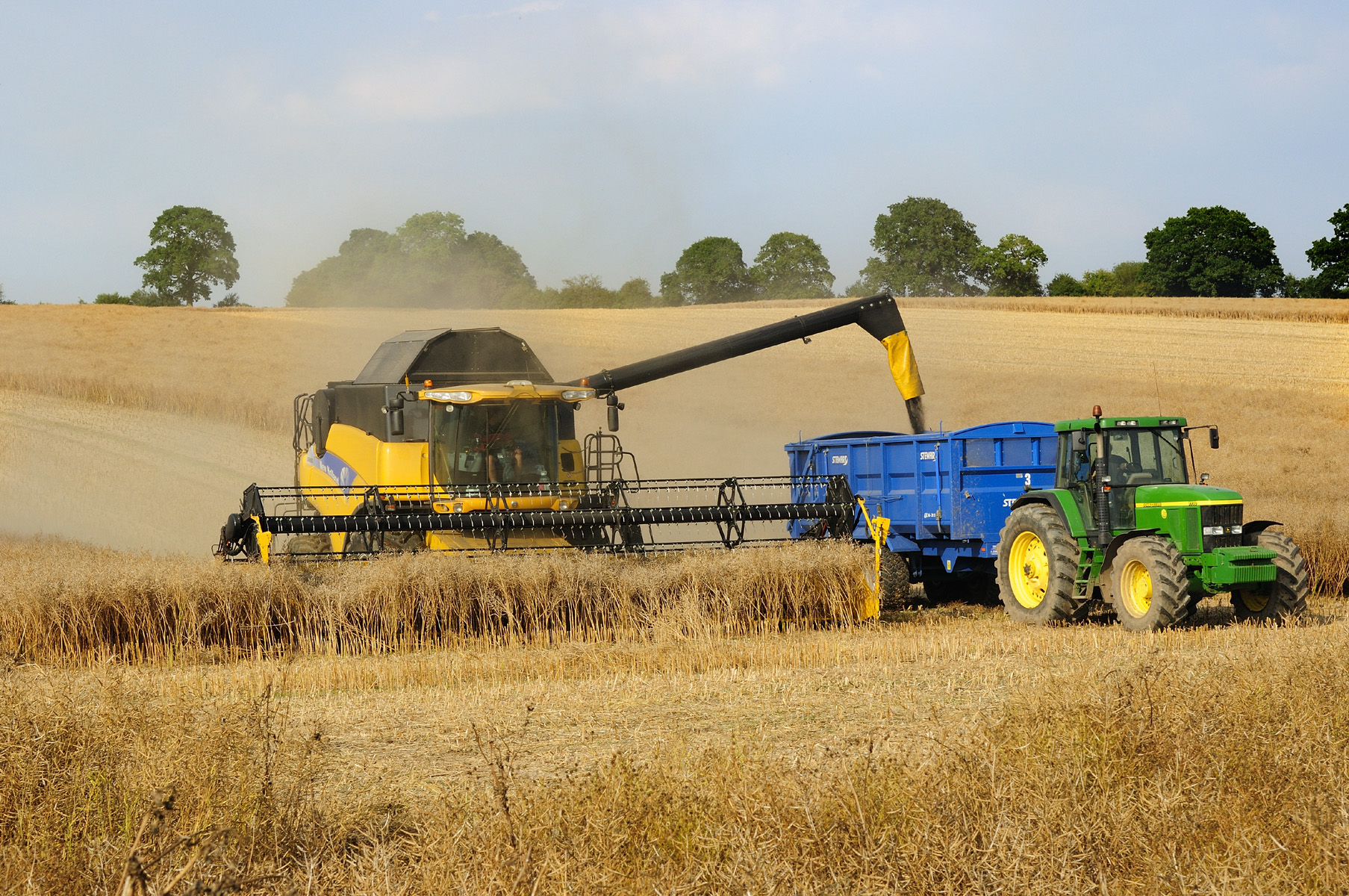
By the time you read this, I expect the combines will be rolling, cutting winter barley somewhere, although it will not be an early harvest.  The growing season has been very variable with periods of heavy rain interspersed with drier days.  April brought frost and drought and, by the end of the month, plant growth was around three weeks behind a normal season.  May was very wet and crops grew very rapidly, resulting in some very lush grass for first cut silage.  Then three weeks of warm sunny weather dried the soil up a little before heavy rain returned again in late June and early July.  Now the Jet Steam has buckled again to allow the Azores High to establish across the country and summer has returned.

Continue reading “Harvest”

Threat to Livestock

There has been huge change to our lives over the past fifteen years, much of it unrecognised.  Of course, the more obvious has been caused by the Covid-19 pandemic, but others are just as significant.

            Starting with politics, the old divisions of left and right have been conflated with the current Conservative Government spending more tax-payers’ money than many Labour administrations.  The Labour party once represented the working man with its heartland in the industrial areas of Wales, the Midlands and the North of England, whilst the Tories represented professional classes in the South, the rural areas of the shire counties.  That was turned on its head at the last Election when the red wall turned blue and the Conservatives now woo votes in the post-industrial heartland once staunchly Labour.  Labour now appeals to middle class intellectuals in Notting Hill and Islington.   This raises the question of who stands for rural areas, the country folk that make up more than a quarter of the population?  Perhaps the Liberal Democrats after the Chesham and Amersham by-election.

Continue reading “Threat to Livestock”

Country Matters – Summer

It has been an extraordinary spring. It seems that whenever I write about the growth of farm crops, I start by describing extreme weather, perhaps we need to redefine what we expect from our climate! But this spring has brought a very dry, sunny but cold April followed by a drenching but still cold May. All sorts of records have been broken yet again.

At least wild spring flowers have enjoyed the weather as primroses, dandelions, buttercups and bluebells have all had a bumper year. One suggestion is that when a plant is under stress, especially if the season is late, it may send up more flower heads in the hope of seeding whilst it can. By mid-May, with waterlogged, very cold soils, the season seemed about three weeks behind normal. It is amazing how quickly nature can recover and the recent dry sunny weather has enabled growth to catch up. Even ticks seem to be around early in large numbers.

Continue reading “Country Matters – Summer”

Deer Management

There are more deer in Britain today than at any time in the last 1,000 years
according to a 2018 Countryfile programme. The population was put at two million,
whilst the Deer Initiative says that numbers have doubled since 1999. What is clear
is that the population and range of the three species commonly found in lowland
England, the fallow, roe and muntjac, have expanded exponentially over recent
decades.

Continue reading “Deer Management”

Originally founded as The Standing Conference for Countryside Management and Sports, and re-launched in 2019 as The Countryside Forum with an amended remit,

The Countryside Forum holds two conferences each year, at which the most influential organisations and individuals who shape the future of the countryside of England, Scotland and Wales meet to consider major issues in a gathering  which is impartial, objective and well-informed. The conferences address all issues which affect our countryside, including conservation, farming, wildlife and country sports.